Maximizing your return on luck
Jan 23, 2026
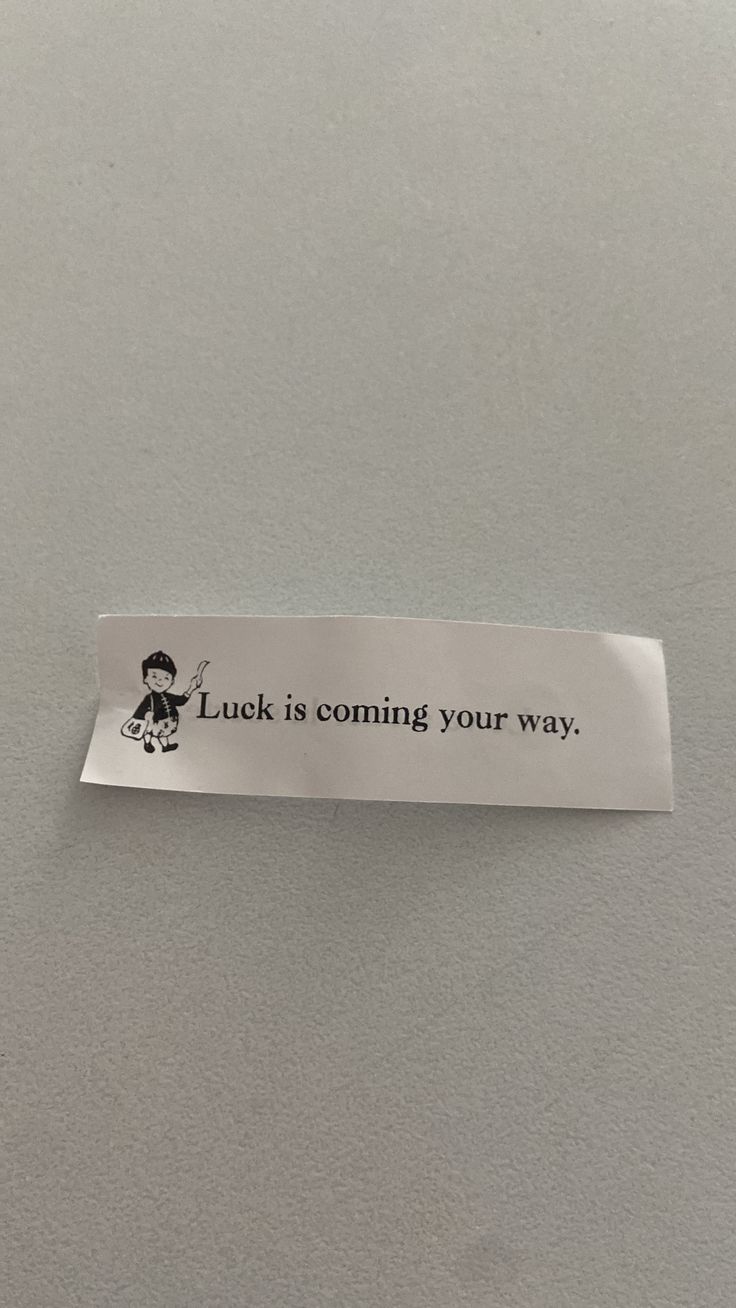
“I was lucky.”
You hear it all the time in interviews. Founders, actors, CEOs and politicians explaining how they got to where they are. It’s honest. Maybe even humble.
But it always left me slightly unsatisfied.
The way luck is usually described makes it sound random. Something that happens to you. Something you wait for. And I’ve learned about myself that standing still has never really been my thing.
So you can imagine my excitement when I came across a concept that fundamentally changed how I think about luck.
But first, let’s take a step back.
The Illusion of Planning
I’m finishing my master this summer, stepping into a chapter defined by uncertainty and far too many options. On any given day, I can imagine myself becoming a designer, joining a startup as a chief of staff, founding something of my own, doing freelance brand consulting, working in VC, studying data science, working in an art gallery, becoming a chef, a photographer, or working in an impact foundation.
None of these paths feel wrong. But none of them feel decisively right either.
It’s a luxury problem, and still a paralysing one. Psychologists call it decision paralysis.
And what tends to make it worse is the advice we’re usually given: plan your way through it. Gather information. Analyse options. Identify the optimal path. Commit. Execute.
That logic only works in a world where the future is predictable enough to plan.
Planning assumes that the range of possible outcomes is knowable. But many of the decisions we care most about — careers, relationships, identity — don’t work like that.
The economist Frank Knight drew a useful distinction here. Risk is when you don’t know the outcome, but you know the odds. Uncertainty is when you don’t even know what the possible outcomes are yet.
Planning is powerful in the first case. In the second, it quietly breaks down. When you don’t know what’s possible, optimising for the “right” choice becomes meaningless. What matters instead is how you move.
And right now, I’m clearly not the only one living with this kind of uncertainty. Industries are being reshaped in real time. Paths that existed five years ago might not exist in two. You feel it in the job market, in the media, in late-night conversations. Different lives, same question: when everything is changing, what’s the right next move?
You can’t plan your way through that.
But you can act your way through it.
When luck falls from the sky, make sure it lands on you
This year, I learned a concept that gave me a name for doing exactly that: maximising your return on luck.
I first heard it in an entrepreneurship class, almost in passing. Alongside building a startup idea, we were given a parallel task: behave in ways that increase the chances that luck might find you.
At first, it sounded vague. Then it turned out to be the most practical thing I learned all year.
The idea comes from effectuation theory, which looks at how successful serial entrepreneurs operate under uncertainty. Rather than starting with a fixed goal, research shows they begin with what they already have and ask a simpler question: what can I do with this right now? How can I maximize the return on my existing skills, capabilities, and network — and expand the surface area where luck can find me?
The core principle is straightforward:
You can’t control outcomes.
But you can control exposure.
For me, this meant reaching out to (a lot of) people I didn’t know. Asking for feedback on very raw prototypes. Going to events without a clear ROI. Building up the courage to start writing. Signing up for things I wasn’t sure I belonged in. Sharing half-formed ideas. Talking openly about my dreams, my hopes, and goals.
I learned to hear no without treating it as a verdict.
And I was surprised by how often the answer was yes. People offered help. Conversations led to rooms I hadn’t planned to enter, people I hadn’t expected to meet, projects I couldn’t have mapped in advance. I found myself on stages, part of initiatives and inside situations that would have felt implausible to plan for.
Luck is your Friend – Stay in Contact
Opportunities don’t appear from nowhere. They move through people – through memory, association, trust. When someone knows what you’re curious about or trying to figure out, you become part of their mental map. And when something relevant passes by, your name has somewhere to land.
From the outside, this looks like luck. From the inside, it’s accumulated exposure.
Maximising my return on luck doesn’t guarantee outcomes. And it doesn’t make the world fair. But in a moment where the future feels uncertain and waiting for clarity is tempting, it gives you something concrete to do. It restores a sense of agency.
You don’t always need to know where you’re going. You just need to give luck somewhere to find you.